



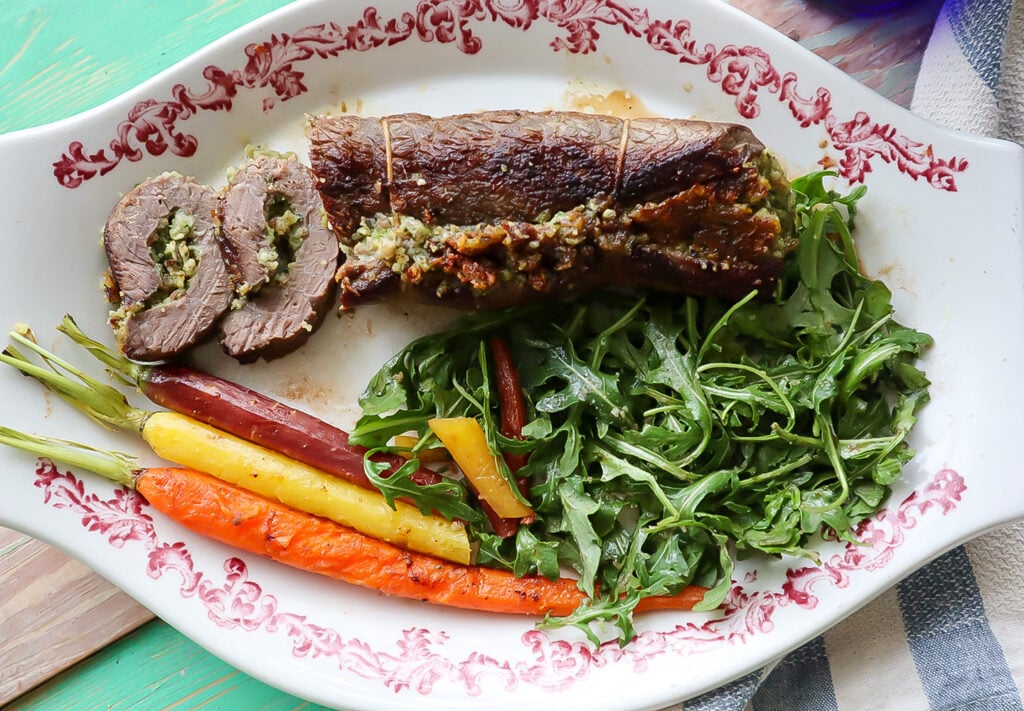
Braciole is flank steak that is pounded thin and stuffed with herbs and cheese, then rolled and oven roasted. Easy enough for a weeknight dinner, and the presentation is pretty enough for a dinner party.
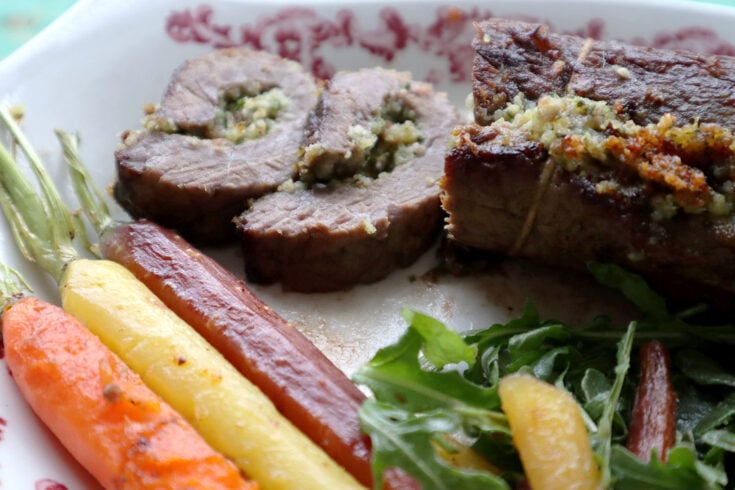
Braciole, also known as beef rollatini, is an Italian-style stuffed beef roll made with thinly pounded flank steak, a savory mixture of cheese, arugula, garlic, herbs and breadcrumbs, then rolled, seared and roasted until beautifully browned. It’s impressive enough for company but completely doable for a weekend dinner.
Sometimes I buy things at the grocery store simply because they’re pretty, with absolutely no idea what I’m going to do with them. And by pretty, I mean a gorgeous cut of beef, an enormous pomegranate, or two pounds of jalapeños that practically jumped into my cart. Apparently, I have very little self-control in the produce and meat departments. This time, however, I actually had a plan.
I’d been wanting to make braciole for a while, and a beautiful flank steak was all the encouragement I needed.
Besides, I firmly believe everybody should pound the hell out of a piece of beef, stuff it with cheese, and roll it up every now and then. If nothing else, it’s cheaper than therapy.
Unlike traditional braciole that’s often braised in tomato sauce, my version gets a quick sear in a cast iron skillet before finishing in the oven. The outside develops a gorgeous crust while the inside stays juicy, cheesy and packed with flavor.
And those crispy, cheesy little ends? Don’t even think about throwing those away. They’re arguably the best part.

Why This Braciole Recipe Works
- Big flavor in every bite. The combination of garlic, oregano, peppery arugula, breadcrumbs and cheese creates a savory filling that complements the beef without overpowering it.
- Searing makes all the difference. Browning the rolled steak in a hot cast iron skillet develops a beautiful crust and adds another layer of flavor before it finishes cooking in the oven.
- Flank steak is perfect for rolling. Once pounded thin, flank steak provides a sturdy base for the filling and slices into gorgeous spirals that look much more complicated than they actually are.
- It’s a little different from traditional braciole. Instead of simmering in tomato sauce for hours, this version is oven-roasted, allowing the beef and cheesy filling to take center stage.
- It looks impressive without being fussy. Those beautiful slices make this an ideal dish for a dinner party, holiday meal, or any occasion when you want people to think you spent all day in the kitchen. No need to correct them.

Tips for Making the Best Braciole

- Pound the steak evenly. Flank steak needs to be thin enough to roll without fighting you. Use a meat mallet to pound it to an even thickness, paying particular attention to thicker areas. This also helps the beef cook more evenly.
- Don’t skip the salting step. I like to generously salt my flank steak and let it rest for about 30 minutes before preparing it. Afterward, I rinse off the excess salt and pat the beef completely dry. Salt helps improve moisture retention and texture, and drying the steak is essential for getting a good sear.
- Don’t overstuff it. As tempting as it is to pile on the filling, leave a little room around the edges so everything stays inside when you roll the steak. Nobody wants half their cheese escaping into the skillet.
- Secure the roll tightly. Kitchen twine or toothpicks will help keep the braciole together while it sears and roasts. If using toothpicks, count them so you know exactly how many to remove before serving.
- Get a good sear. Use a hot cast iron skillet and brown the rolled steak on all sides before transferring it to the oven. This develops a flavorful crust that makes the finished dish even better.
- Use a meat thermometer. Cooking time will vary depending on the thickness of the steak and the size of the roll. Check the center with an instant-read thermometer rather than relying on cooking time alone. For food safety, whole cuts of beef should reach 145°F and rest for at least 3 minutes.
- Let it rest before slicing. Give the braciole several minutes to rest after removing it from the oven. This helps retain the juices and makes it easier to cut those beautiful spiraled slices.

Variations and Substitutions
- Add prosciutto. Layer thin slices of prosciutto over the steak before spreading on the cheese mixture for an extra savory, salty bite.
- Switch up the greens. Baby spinach makes a milder substitute for arugula, while sautéed spinach adds a slightly different texture. Just squeeze out any excess moisture before adding it to the filling.
- Try a different cheese. A sharp cheddar-Parmesan blend is my favorite here, but provolone, fontina, or a combination of mozzarella and Parmesan would also work beautifully.
- Add some heat. A pinch of crushed red pepper flakes in the filling adds a little kick without overwhelming the other flavors. And yes, I fully support adding more if that’s your thing.
- Make it with mushrooms. Finely chopped, sautéed mushrooms add an earthy flavor that pairs beautifully with the beef and cheese. Cook off their moisture before incorporating them into the filling.

What to Serve With Braciole
I served this braciole sliced on a platter with roasted rainbow carrots and fresh arugula, and honestly, it doesn’t need much more than that. The sweetness of the roasted carrots balances the savory, cheesy filling, while the peppery arugula adds a fresh contrast to the richness of the beef. Plus, all those colors make for one gorgeous presentation.

If you’re looking to round out the meal, here are a few more delicious options:
- Creamy polenta or Parmesan grits are perfect for soaking up the flavorful juices from the beef.
- Roasted or twice-baked potatoes make a hearty, comforting side, especially with a little garlic and Parmesan.
- Mushroom risotto adds an earthy richness that complements the beef beautifully.
- Roasted asparagus or broccolini keeps things simple and adds a little green to the plate.
- Homemade focaccia or crusty bread is always welcome, especially when there are delicious juices involved. Leaving those behind would just be wasteful.

How to Store and Reheat Braciole
Refrigerator: Store leftover braciole in an airtight container in the refrigerator for up to 3-4 days. Keep any juices from the pan with the beef to help prevent it from drying out.
Freezer: Wrap the cooked, cooled braciole tightly in plastic wrap, then place it in a freezer-safe container or bag. Freeze for up to 2-3 months for the best quality. Thaw overnight in the refrigerator before reheating.
Reheating: Place the sliced braciole in a baking dish with a splash of beef broth or some reserved pan juices. Cover with foil and warm in a 300°F oven until heated through to 165°F. Keeping it covered helps prevent the beef from drying out.
Frequently Asked Questions
What is braciole?
Braciole is an Italian dish made with thin slices of beef rolled around a savory filling, typically containing cheese, breadcrumbs, garlic, and herbs. Traditional Italian-American versions are often slowly simmered in tomato sauce, but this recipe is seared and oven-roasted for a beautifully browned exterior.
Is beef rollatini the same as braciole?
Beef rollatini and braciole are closely related dishes featuring thin cuts of beef rolled around a savory filling. While traditional Italian-American braciole is often simmered in tomato sauce, beef rollatini can also be seared, baked, or roasted. This recipe skips the tomato sauce and lets the flavorful cheese and herb filling take center stage.
What is the best cut of beef for braciole?
Flank steak works beautifully for this recipe because it’s relatively lean, flavorful, and can be pounded thin enough to roll around the filling. Be sure to slice the finished braciole against the grain for the most tender results.
Can I make braciole ahead of time?
Absolutely! You can assemble the braciole up to a day in advance, secure it tightly, and refrigerate it covered until you’re ready to cook. Keep it refrigerated rather than letting it sit out, and cook it thoroughly before serving.
How do you keep braciole from falling apart?
The trick is to pound the steak evenly, avoid overfilling it, and roll it tightly. Secure the roll with kitchen twine or toothpicks before searing, and allow the cooked beef to rest before removing the twine and slicing.
Is braciole always cooked in tomato sauce?
Nope! Although tomato-braised braciole is common in Italian-American cooking, there are several regional variations. This version is seared and roasted without tomato sauce, allowing the flavors of the beef, cheese, garlic, and herbs to shine.
Here’s your printable –
Braciole
Tender Italian braciole made with flank steak rolled around a savory filling of cheese, arugula, garlic and herbs, then seared and roasted.
Ingredients
- 2 lb. flank steak, skirt steak, or similar cut of beef, pounded flat with a mallet
- 1 tbsp coarse sea salt, more to taste
- 1 cup arugula
- 1/4 yellow onion, diced
- 1 tbsp oregano, dried
- 2 tbsp garlic, minced
- 1 cup sharp cheddar/Parmesan blend, shredded*
- 1 tsp balsamic vinegar
- 1/2 cup Panko crumbs
- 2 tbsp olive oil
- 2 tbsp canola oil
Instructions
- Preheat oven to 350°.
- Sprinkle each side of beef with sea salt and allow it to sweat, about 20-30 minutes*. Rinse thoroughly and pat dry. Set aside.
- In a food processor, combine arugula through Panko drizzle about a tablespoon of olive oil. Pulse until ingredients combined and chopped.
- Add mixture to one side of beef, and roll tightly. Use twine to tie each side securely.
- Drizzle canola oil in a cast iron skillet over medium high heat.
- Add beef to skillet and sear on each side, about 1-2 minutes.
- Put skillet in oven and roast until done, about 25-30 minutes.
Recommended Products
We are a participant in the Amazon Services LLC Associates Program, an affiliate advertising program designed to provide a means for us to earn advertising fees by linking to Amazon.com and affiliated websites.


Notes
*If you want to allow your beef to sweat any longer than 30 minutes, I suggest putting it back in the fridge until ready to cook.
*Let it rest for about 10 minutes before cutting.
*If you can't find a cheddar/Parm blend, ½ sharp cheddar and ½ Parmesan would work, or just sharp cheddar would work as well.
Nutrition Information:
Yield: 4 Serving Size: 1 Amounts Per Serving: Calories: 844Total Fat: 49gSaturated Fat: 17gTrans Fat: 0gUnsaturated Fat: 27gCholesterol: 238mgSodium: 2186mgCarbohydrates: 14gFiber: 1gSugar: 2gProtein: 82gThe provided nutrition calculated may not always be accurate.