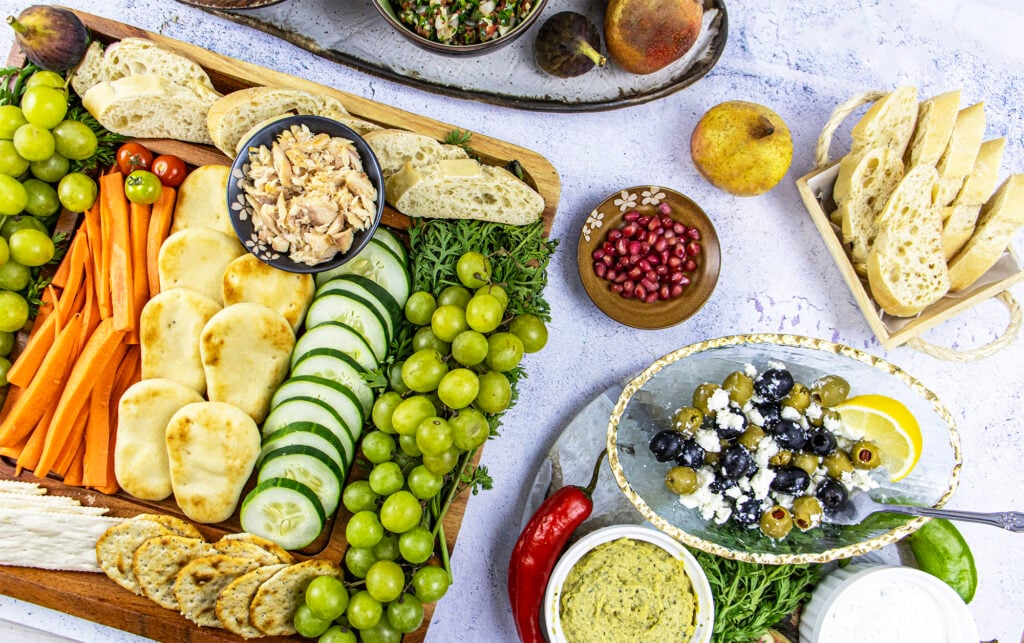
Mediterranean Mezze Platter – a vibrant grazing board with ultra-smooth hummus, zesty tabbouleh, fresh fruit, olives, and all the dunkable things.
If you’ve ever been to a party where someone plops down a grocery store veggie tray with congealed ranch dip in the middle, you know the crushing disappointment of snack time gone wrong.
Enter the Greek Mezze Platter; charcuterie’s louder, more colorful, unapologetically extra cousin who shows up dressed to impress and steals the show. A mezze platter isn’t here to politely fill a gap between meals. Mezze is the meal. Mezze is an experience. And honestly, once you get into it, you’ll wonder why you ever settled for celery sticks and cheddar cubes on toothpicks.
Let’s start with a little cultural moment: the word mezze (or mezé) comes from the Middle East and Mediterranean, meaning “taste” or “snack,” but don’t be fooled. This is not a snack situation – it’s a sprawling, graze-for-hours, pour-another-glass-of-wine, tell-me-your-deepest-secrets kind of table.
In Greek culture, mezze is about slowing down, sharing, and making the food part of the conversation. If that sounds romantic, it is – and the food happens to have some health benefits, too. According to the Mayo Clinic, the Mediterranean diet is linked to lower risk factors for heart disease and stroke, and may lower immune system action (inflammation). (Mayo Clinic staff, 2023)
And the best part? You don’t need to book a flight to Athens to pull this off at home. You just need some good quality ingredients, a decent cutting board, and a willingness to act like you’re feeding a small village even if it’s just for you and your bestie on Bachelor finale night.
The Spread
Here’s what’s on my platter (well, spread really):
Hummus – This is a Mediterranean board, after all (more on this in a hot second).
Tabbouleh – For freshness and a nice contrast to creamy dips.
Naan – Pieces, crostini, and crackers – because carbs are life and you need scoops.
Pomegranate arils – For juiciness (and they’re like jewelry for your platter).
Carrots and cucumbers – These are for feeling virtuous until you dunk them in half a cup of hummus.
Grapes and fresh figs – For the “sweet” in sweet & salty.
Nuts – Almonds, pistachios, walnuts, whatever’s in the pantry. For crunch, for nibbling, for pretending this is all very healthy.
Kalamata and green olives with feta – Basically the holy trinity of Greek snacking.
Smoked trout – Hello, salty umaminess.
Mama ganoush – AKA zucchini Baba Ganoush.
- Lebnah – Creamy, cool and more yogurty than yogurt. Ok, fine, it’s not included in this particular spread, but it has been on mine almost every time since the first time I made it because the stuff is GOOD. So when you’re done getting these recipes, click here to get that recipe so you can be thorough.
This is less “a platter” and more “a delicious traffic jam of textures and flavors.”
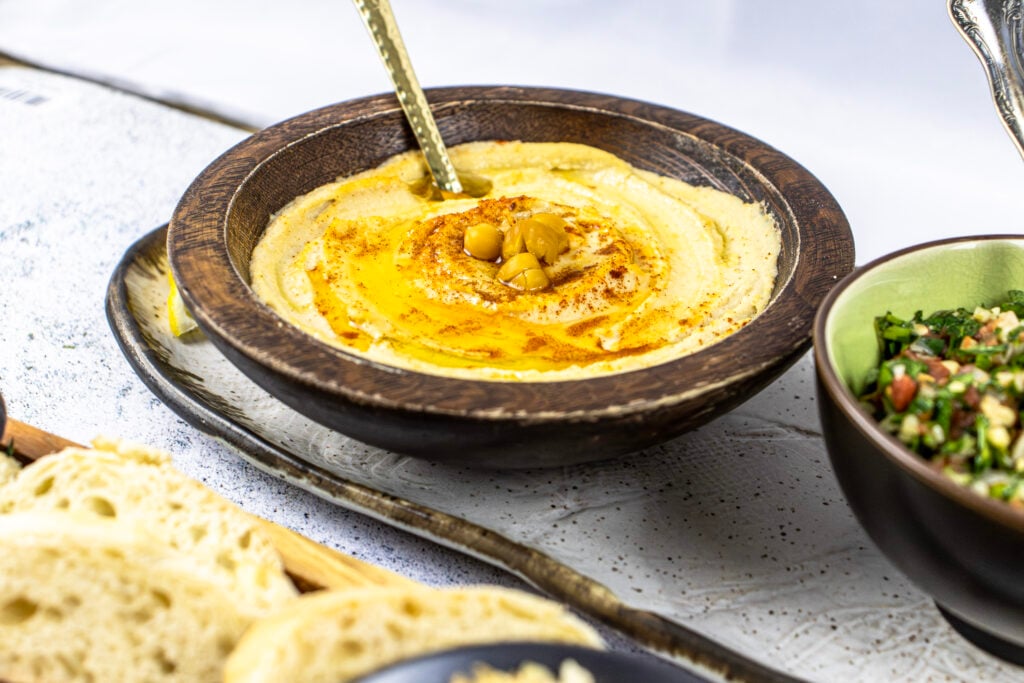
The Smoothest Hummus of Your Life
Now, I know what you’re thinking: “Shea, everybody and their mother has a hummus recipe.” Yes, true. And half of them taste like beige sadness because they’re gritty, bland, or just…meh.
My hummus is not “meh.”
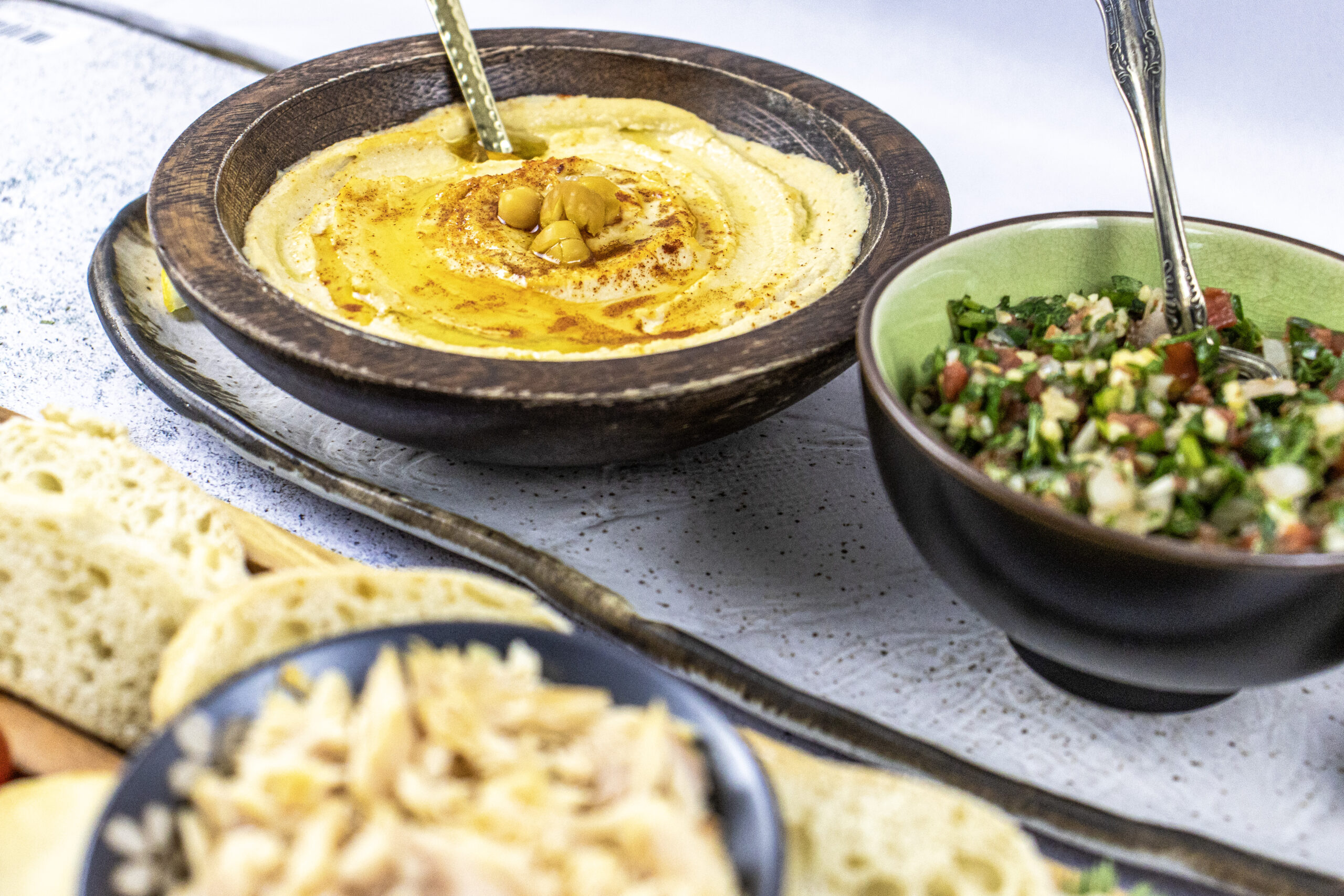
My hummus is smooth, rich, lemony, and has a cumin kick that will make you feel slightly superior to anyone buying the prepackaged tub at Publix. I do have a few hummus recipes here on the blog, but believe it or not I don’t have a recipe here for traditional hummus. Pomegranate, Sesame Wasabi, Black Bean, etc. but not traditional, so here we are.
This is exactly how I make it at home (and how you should too if you’re a hummus fiend):
Chickpeas – Obvs.
Tahini – Sesame paste, and if you don’t have any sunflower butter, cashew butter or a little drizzle of sesame oil will work.
Lemon – It gives it that signature mild tartness, and it would not be hummus without it.
Garlic – This isn’t 100% mandatory, but if you’re a garlic lover like me, it’s necessary.
Olive oil – This gives hummus that smooth and fluffy texture, but in a pinch the liquid from the chickpea can (aquafaba) will help to achieve the same result. Yes, we will address this at some point.
Cumin – This gives hummus a little kick.
Salt – Brings out foods’ natural flavors.
Paprika – Mainly for color, but also adds a tiny bit of heat.
The real trick?
Peeling the skins off the chickpeas. You know those little skins that are usually floating around after you rinse them? I know. It sounds insane. Who has time for that? You do, because the payoff is hummus so smooth you’ll never make it any other way. If you’re using canned chickpeas (I always do), dump them in a strainer and rinse them.
You’ll want to shake the strainer, rinse them again, then shake again – you get the picture. This will actually do a good bit of the work for you because the shaking and rinsing will rub some of the skins off, or at least halfway off. Then, gently rub the rest of the chickpeas between your fingers and pop off those skins. It’s oddly therapeutic, almost like bubble wrap, but edible. I usually find myself wishing there were more to pop off when I’m finished. Sick, I know.
The second trick? Use them at room temperature. Don’t boil them, don’t warm them up or roast them, just don’t complicate your life. Just rinse, shake, peel, and toss them straight into the food processor.
Tabbouleh: The Fresh Factor
If hummus is the silky star of the show, tabbouleh is its bright, herbaceous sidekick. I’ll be sharing my recipe for tabbouleh, but here’s the gist: parsley, bulgur, tomato, cucumber, lemon juice, and olive oil all chopped up into a confetti of freshness.
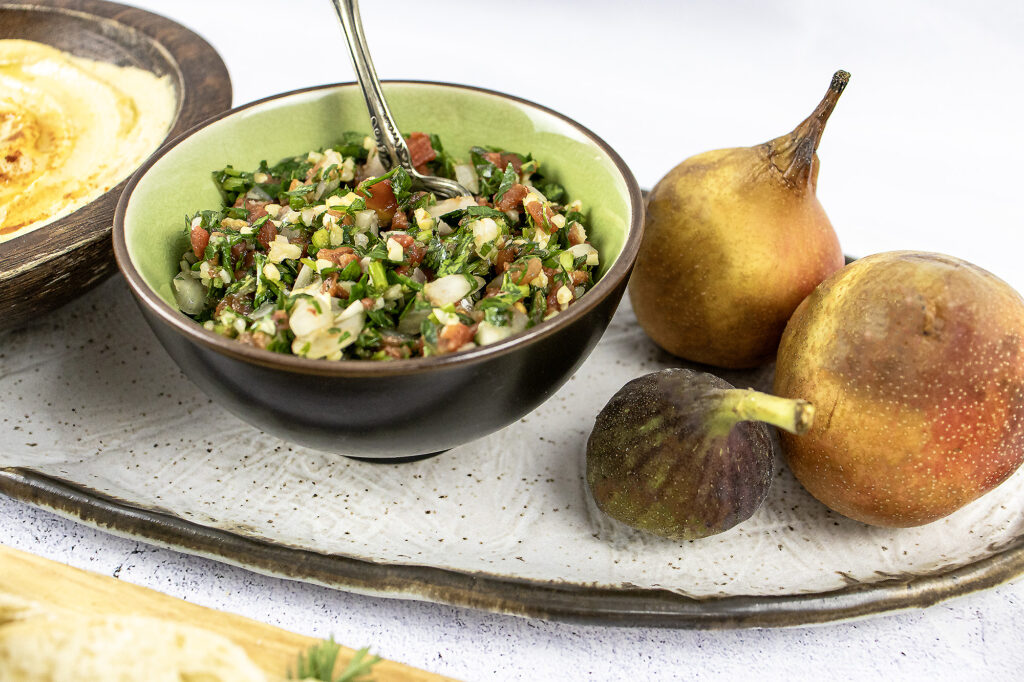
It’s light, it’s zippy, and it makes you feel slightly better about the fact that you just ate half a loaf of naan with your hummus. I absolutely love this stuff. Tabbouleh and hummus taste like they were made for each other.
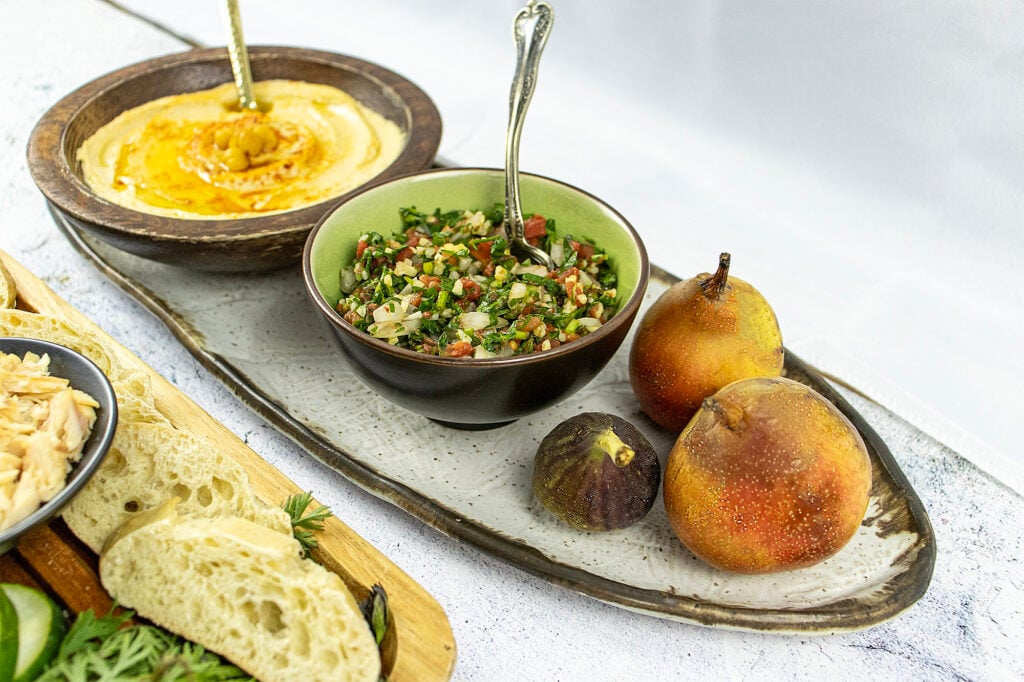
I want to show you this beautiful platter that was sent to me by Gina DeSantis Ceramics (below holding the hummus and tabbouleh). It’s an absolutely gorgeous piece that is so versatile and looks beautiful in my kitchen. This platter is about 16″ long, a generous size. Her pieces are all handmade and some are stamped before being glazed, giving it a subtle woven like texture. They’re dishwasher and microwave safe, which was surprising to me because you usually don’t think of pottery being so durable.
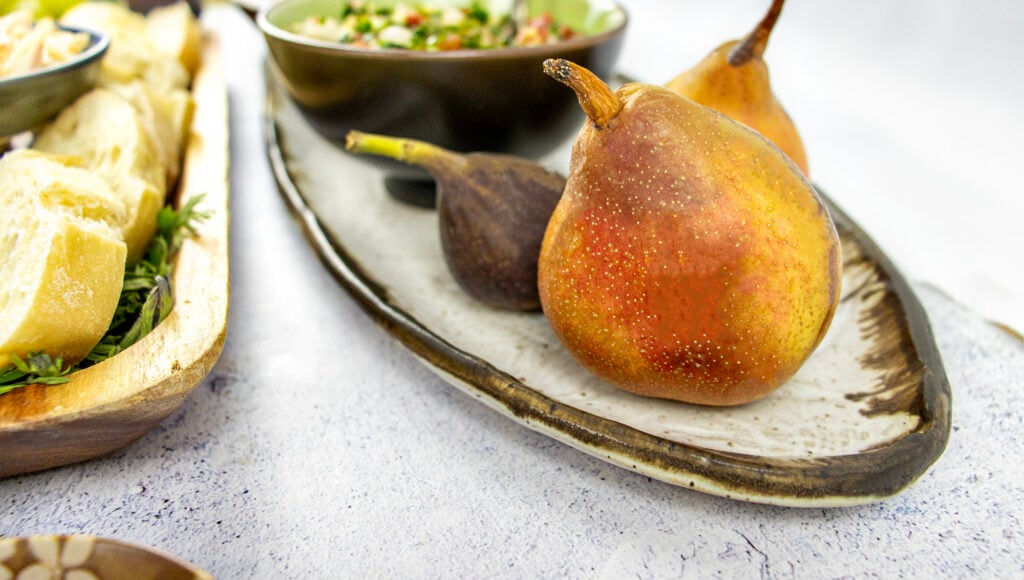
I have another piece, a batter bowl, that will be shown in an upcoming post next month. I fell in love with her work by looking through her website, but photos do NOT do these pieces justice – they’re beautiful. Go here to see every gorgeous handmade piece in her gallery.
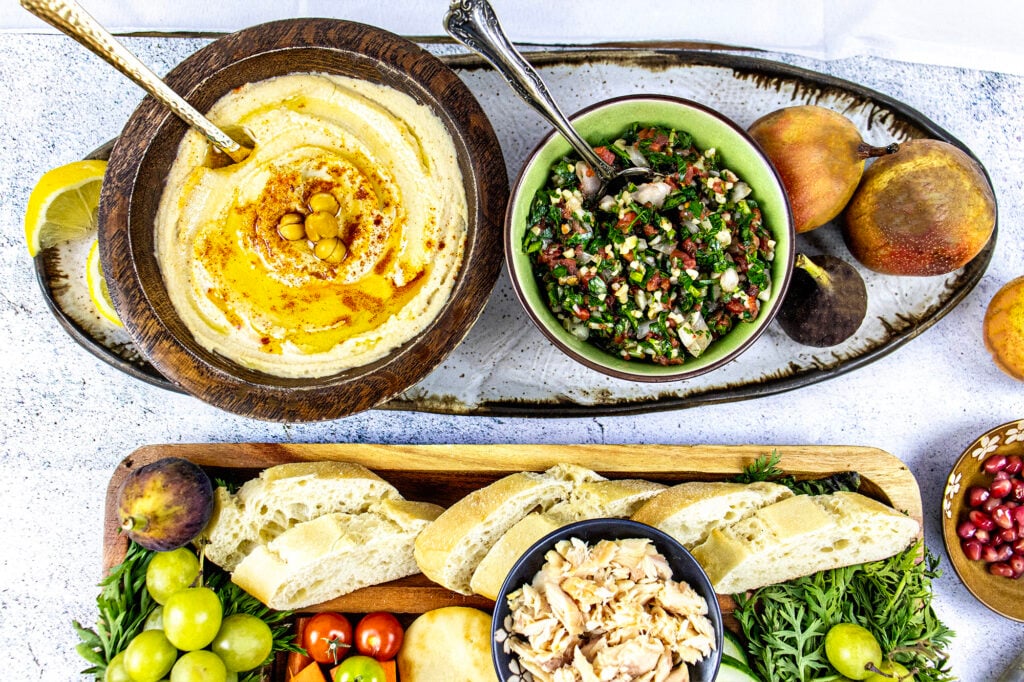
Why a Mezze Platter > Charcuterie
Look, I love a charcuterie board as much as the everybody else, but there’s only so much havarti-salami action a girl can take. Mezze platters are built different. They’re vibrant, they’re textured, they don’t require you to spend $38 on some artisan cheese you may never finish. Instead, you’re pulling together fresh vegetables, nuts, and Mediterranean staples that make sense together.
It’s also way more interactive.
People linger, sip, and scoop instead of awkwardly sawing through Manchego while pretending not to care about calories. A mezze platter says: “Stay awhile.” A charcuterie board says: “I watched three IG reels and panic-bought Brie.”
Building the Board
Here’s how I assemble mine without it looking like a toddler dumped out the fridge:
Start with bowls. Hummus, tabbouleh, mama ganoush, olives + feta all get their own little vessels so nothing turns into a puddle. It’s also a good excuse to pull out all your fun little bowls you never get to use.
Anchor with carbs. Naan pieces, crostini, and crackers go around the bowls like loyal disciples.
Add color. Grapes, figs, and pomegranate arils bring the jewel tones. Carrots and tomatoes balance it out with their solid Crayola primaries.
Fill in with accoutrements. Nuts, peppers, smoked trout, figs – tuck them in anywhere you see empty space.
Finish strong. A drizzle of olive oil here, a sprinkle of herbs there, maybe an extra wedge of lemon for garnish. You’re not just feeding people; you’re creating edible art.
Making a mezze platter isn’t about rigid rules, it’s about vibe. Take your time, pour some wine, and let the food keep the conversation going. Mezze culture is communal. It’s messy. It’s loud. It’s passing plates back and forth, laughing too much, and realizing you’re full but still reaching for “just one more olive.”
And honestly that’s exactly the kind of eating I enjoy the most.
So ditch the sad veggie tray. Invite your friends, roll up your sleeves, and put out a mezze spread that looks like it was created by Cleopatra herself. Because if Dionysus was about good wine, I’d like to think Athena was definitely about the hummus.
Here’s your printable for the hummus and tabbouleh –
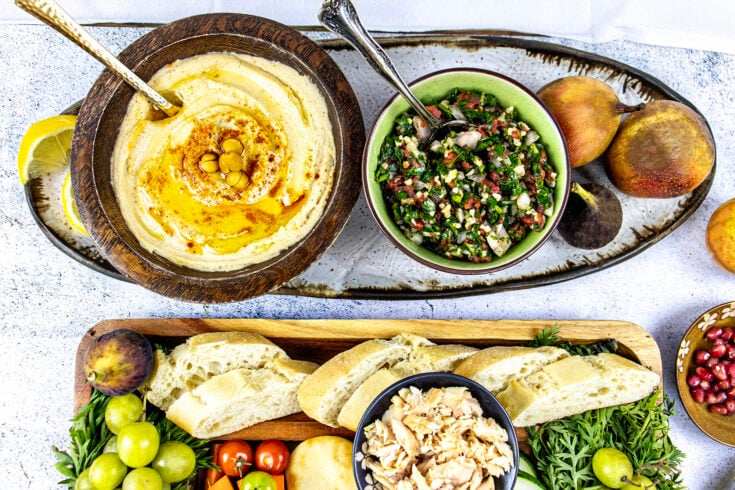
Hummus + Tabbouleh
The only recipes for hummus and tabbouleh you'll ever need.
Ingredients
Hummus
- 2 cans chickpeas, rinsed + skins removed (room temp)
- ⅓ cup tahini
- Juice of 1 large lemon
- 2 cloves garlic
- 2 tbsp olive oil (+ more for serving)
- ¾ tsp cumin
- 2 - 4 tbsp cold water
- Kosher salt, to taste
- Paprika, for garnish
Tabbouleh
- ½ cup fine bulgur
- 2 bunches flat leaf parsley, finely chopped
- 1 small cucumber, diced
- 2 medium tomatoes, diced
- 3 green onions, sliced
- Juice of 2 lemons
- ½ tsp lemon zest
- ¼ cup olive oil
- 1 tbsp white vinegar
- Kosher salt, to taste
Instructions
Hummus
Tabbouleh
Recommended Products
We are a participant in the Amazon Services LLC Associates Program, an affiliate advertising program designed to provide a means for us to earn advertising fees by linking to Amazon.com and affiliated websites.